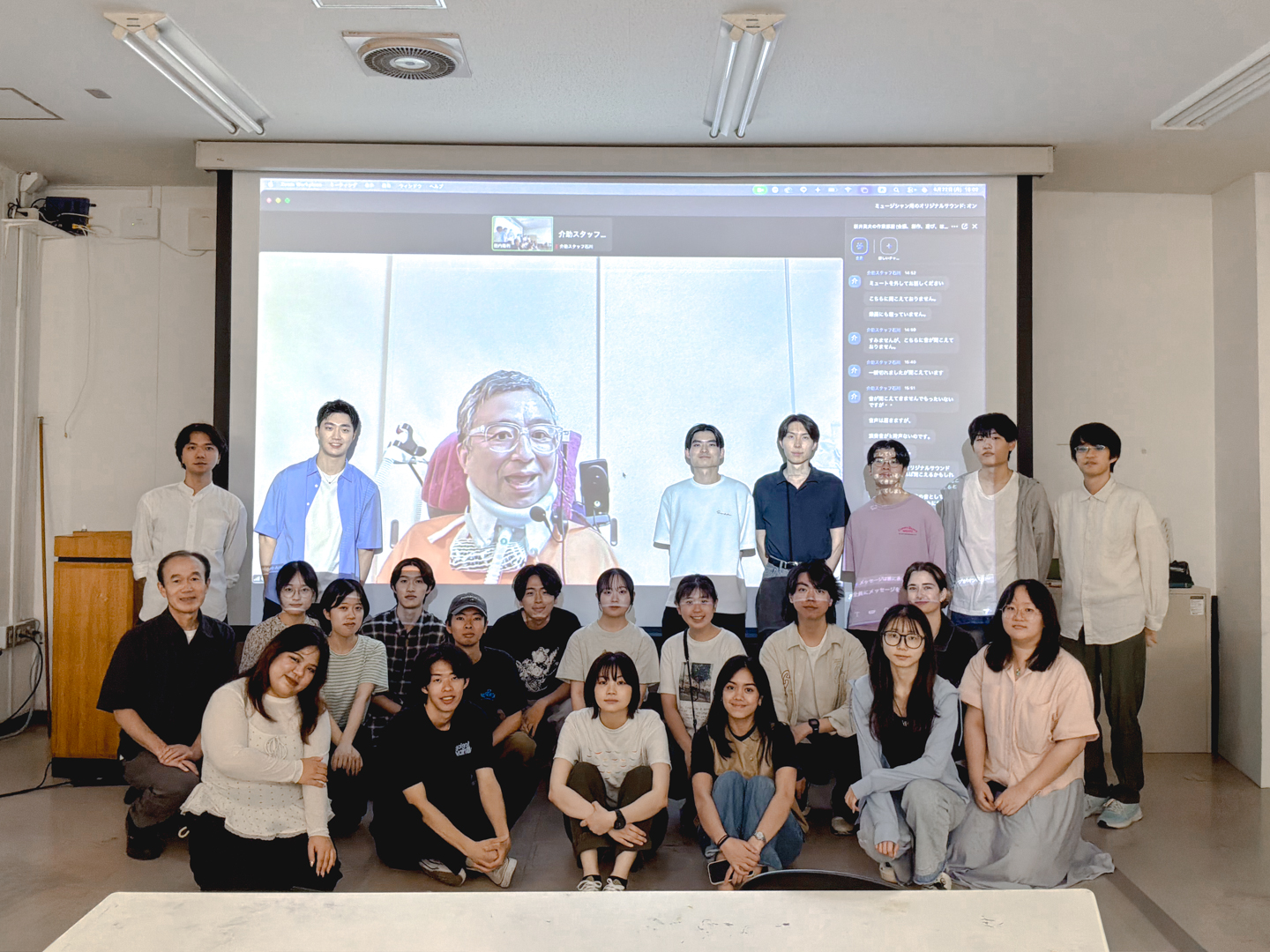
In June 2026, I joined Chiba University’s graduate course Materials Planning as an adjunct lecturer for Universal Design of Expressive Acts, led by Professor 田内隆利. I introduced ways to build apps with AI and supported the students’ work.
The course is outlined as follows.
This course aims to reconsider expression as an urgent matter of human existence, rather than a privilege reserved for a select group of artists and designers. To explore this, students create and propose applications that support expressive acts by people living with ALS.
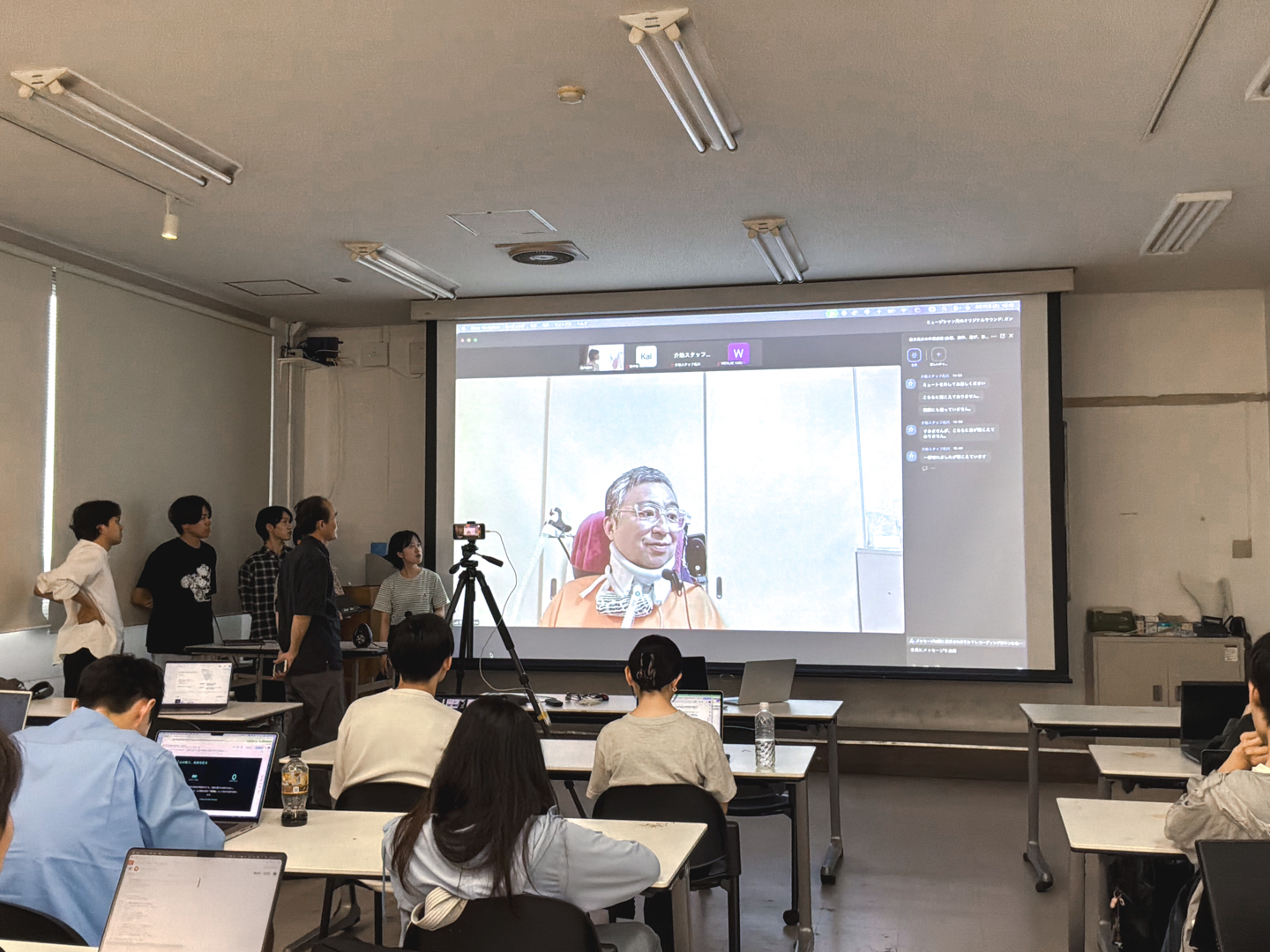
Hideo Arai joined the final presentations online and offered feedback on the apps developed by the students.
Hideo Arai is a dance artist whose practice includes bodily expression and participatory workshops. He was diagnosed with ALS (amyotrophic lateral sclerosis) in 2022. ALS affects the nerves that control muscles, causing progressive muscle weakness. Arai continues to explore expression with his changing body.
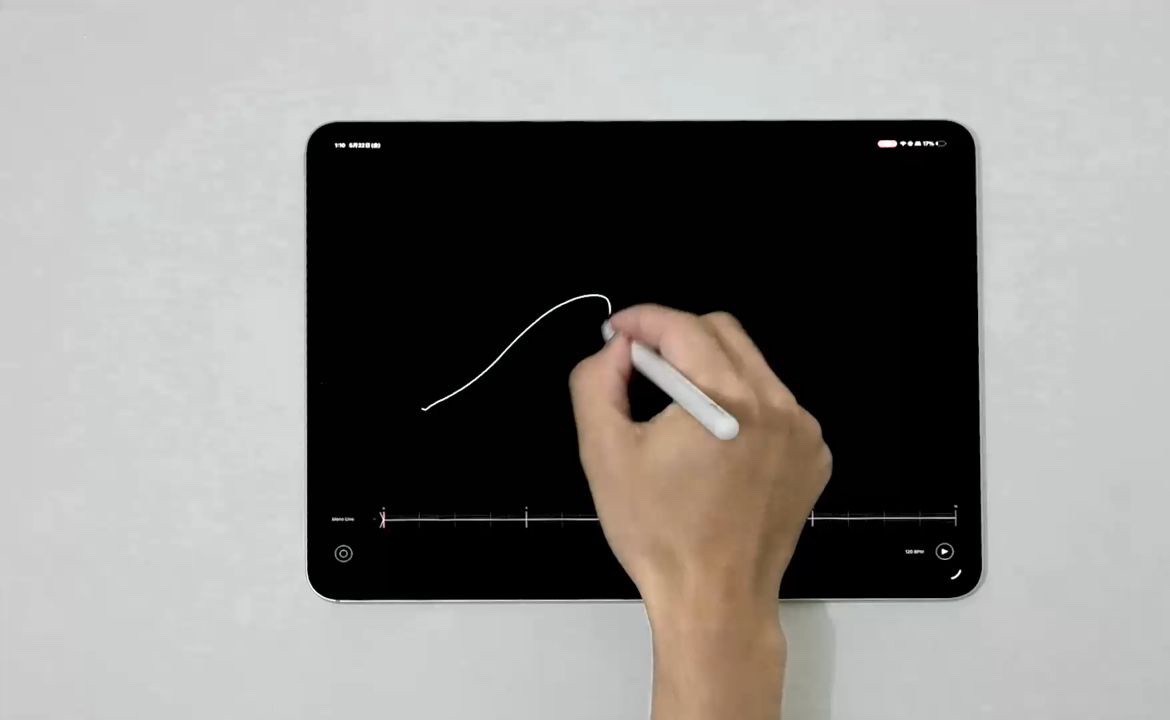
My research explores human embodiment and electronic music by linking the movement of drawing lines with sound. Together with Professor 田内隆利, I considered whether this work could be extended to support expressive acts by people living with ALS. Since eye movement often remains relatively preserved in ALS, we focused on gaze-based control. Through conversations with Arai, this exploration developed into this course, in which students could investigate these possibilities together.
Students imagined what was happening in Arai’s body and how he might experience it as they created tools for enjoying expression. AI supported the programming needed to turn their ideas into working apps.
The students’ projects took many forms: controlling lines, shapes, and colors through gaze to compose images; performing music; combining multiple elements to design expressive experiences; and creating opportunities for people to express themselves together and communicate.
Excerpt from 21:30–21:40 of the original recording
At first, we considered how people who find speaking or drawing difficult could take part in the forms of expression we use in everyday life. Looking back, I think we were trying to create useful tools that would compensate for abilities being lost and make expression possible.
However, as we listened to Arai and continued making work with the students, that perspective gradually changed. What was needed was not only to bring someone closer to existing forms of expression, but to start with their own movements and sensations and create situations in which people around them could also participate and interact.
The students’ work expanded from tools supporting one person’s actions to experiences in which multiple people could influence sound and images and create expression together. Alongside addressing individual difficulties, these creations became new places to play: spaces that brought different people into communication, beyond the categories of disabled and nondisabled.
Through this class, I came to feel that encounters with different bodies and sensations can offer more than ways to compensate for what someone cannot do. They can also become opportunities to discover new ways to play and relate to one another. By lowering technical barriers and helping turn these ideas into working creations, AI could broaden both who can participate in expression and the ways they do so.